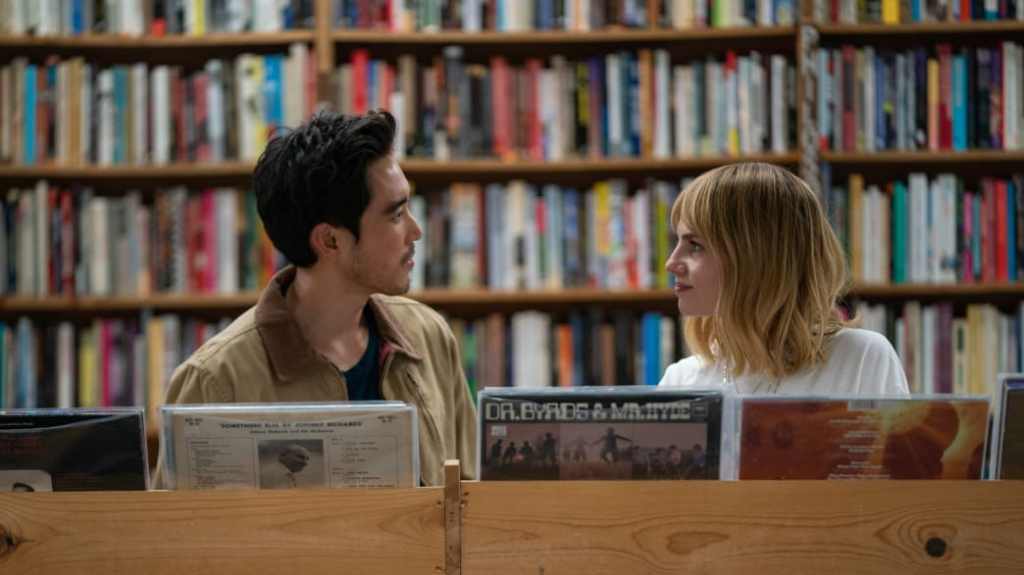
The Greatest Hits, directed by Ned Benson and now available for streaming on Hulu, is a cinematic gem that lives up to its title and then some. From the moment I caught wind of its existence, I was buzzing with anticipation, especially with its promise of blending elements from two of my all-time favourites, Mixtape and About Time. Add to that the inclusion of the talented Lucy Boynton, and my excitement soared even higher. But let me tell you, this film not only met my expectations but soared above them in ways I couldn’t have imagined.
The film follows Harriet (Lucy Boynton), who uncovers a remarkable ability: certain songs can transport her back in time, allowing her to revisit cherished moments with her deceased boyfriend. However, her fixation on the past begins to disrupt her present, hindering her ability to move forward. As she grapples with the temptation to dwell in the past, Harriet must confront the delicate balance between honouring the past and embracing the possibilities of the present.
At its core, The Greatest Hits isn’t just a love story; it’s a poignant exploration of grief and the journey toward healing and moving forward. What sets it apart is its skilful handling of these weighty themes within the framework of time travel. Unlike many films that stumble over the complexities of intertwining time travel with romance, this one navigates the terrain with grace and finesse, reminiscent of Richard Curtis’ About Time.
What struck me most was how seamlessly the film weaves together the concept of time travel with the power of music. It’s a concept both simple and profound: music has the ability to transport us back to specific moments in time, evoking a range of emotions, both joyful and sad. Here, this connection is not just a clever plot device but a deeply resonant theme that elevates the storytelling to new heights.
But what truly sets The Greatest Hits apart is its ability to balance darkness with light, sorrow with joy. It tackles the depths of human experience without ever feeling overwhelming, leaving audiences laughing, crying, and ultimately feeling more alive by the film’s end. On top of its compelling narrative, the film boasts an exceptional cast, with standout performances from Lucy Boynton, David Corenswet, and Justin H. Min. Their chemistry on screen is palpable, drawing viewers into their world with every heartfelt moment.
Visually stunning and emotionally resonant, The Greatest Hits is a cinematic experience not to be missed. It’s a feel-good watch that speaks to the universal human experience, reminding us of the power of love, music, and the journey toward healing.
P.S. My Letterboxd handle is @BhumikGrover.

 Bhumik’s Anxious Moments
Leave a comment